

- Joined
- Jun 18, 2022
- Messages
- 8,688
- Reaction score
- 6
- Points
- 38
The Most Under-Utilized Exercises for Developing Devastating Power
By Joey Percia
‘Olympic lifting is terrible, heavy barbell training is useless, sprinting sucks’.
Sound familiar?
Training to maximize power output becomes a very interesting topic when discussed amongst strength coaches. Some coaches swear by Olympic lifts and its variations, while others use a variety of approaches when seeking out maximal power development.
What is power?
Power is work divided by time ( P = work / time) and is a product of strength and speed. Research has shown that the optimum load for maximizing power production in a particular exercise depends on the movement being performed. Some studies show very little significant difference between loads (the Olympic lifts), while others have a much more obvious load that maximizes power (jump squats).
Someone that tells you that power is only developed at a certain percentage of your 1RM (for example, at 30% of 1RM), no matter what the exercise being performed, is misinformed. Some lifts are maximized at 0% of 1RM (jump squat), others at 30-70% of 1RM (bench throw, bench press, leg press, half squat, split jump squat), and others at 80% of 1RM and above (Olympic lift variations).
Time is precious. It is a waste to prescribe frustrating and difficult tasks to athletes whose time spent with a strength coach is limited and valuable. Choose movements that are significantly easier to learn and perform yet are still highly beneficial.
One of the key aspects for developing power that demands respect is intent. The intent to move the bar, object or body as fast and hard as humanly possible while maintaining proper technique. When the load is higher, speed will necessarily decrease, but the intent to move as fast as possible must remain. This is a very important component to developing power.
In this case, violence is acceptable — often encouraged. Perform the movement with ‘controlled chaos’ as I like to call it.
Make sure you allow adequate rest in between sets to fully recover and keep those bad intentions flowing.
When I worked with Bret at the Glute Lab we liked to perform heavy kettlebell swings with the 203lb kettlebell. For males with a 450lb+ deadlift this is a good goal weight.
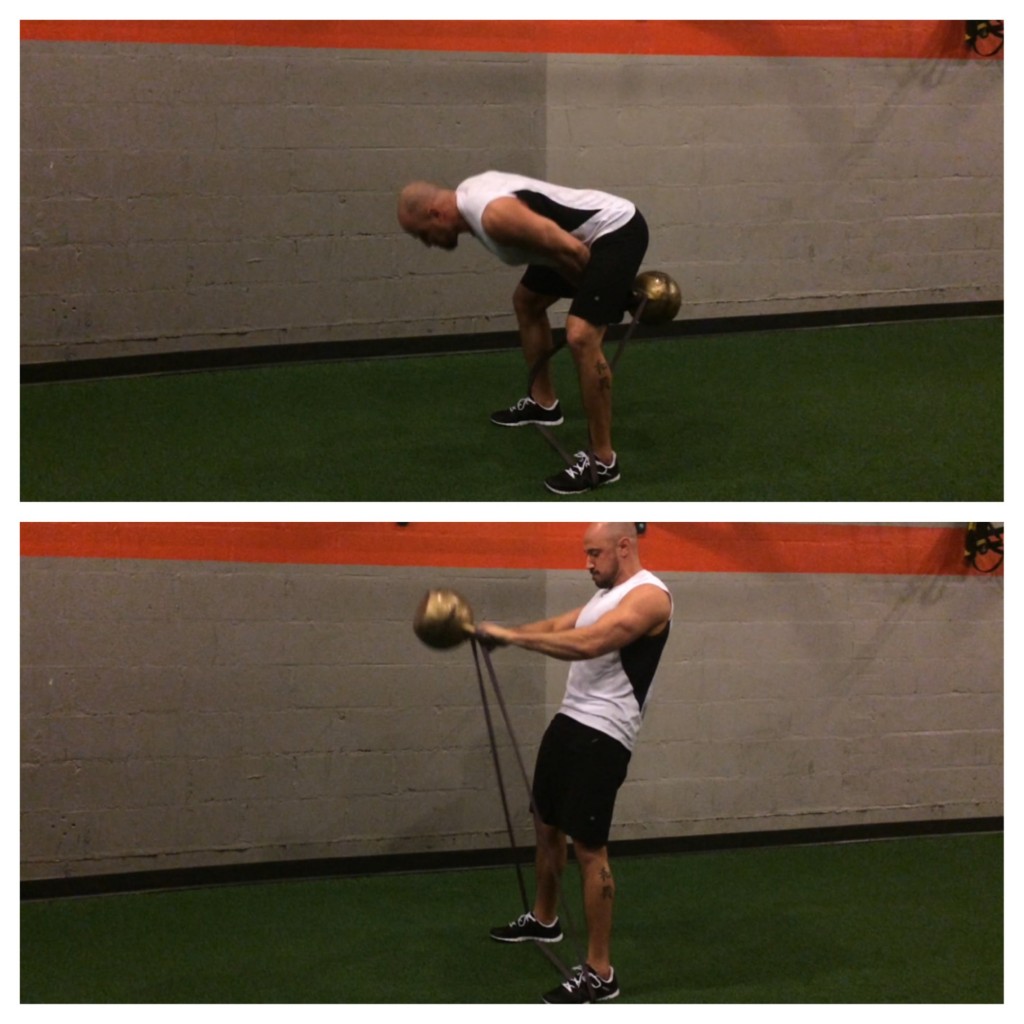
Unfortunately the largest kettlebell I have access to is the 106lb, that is shown. I attach bands to the kettlebell to add resistance. This doesn’t have the exact same feeling of swinging the 203lb’er but it is very similar and teaches a powerful hip extension. I actually prefer the band resisted swing over the heavy kettlebell swing because it is easier for most to control the movement but still must be performed violently because of the added band resistance.
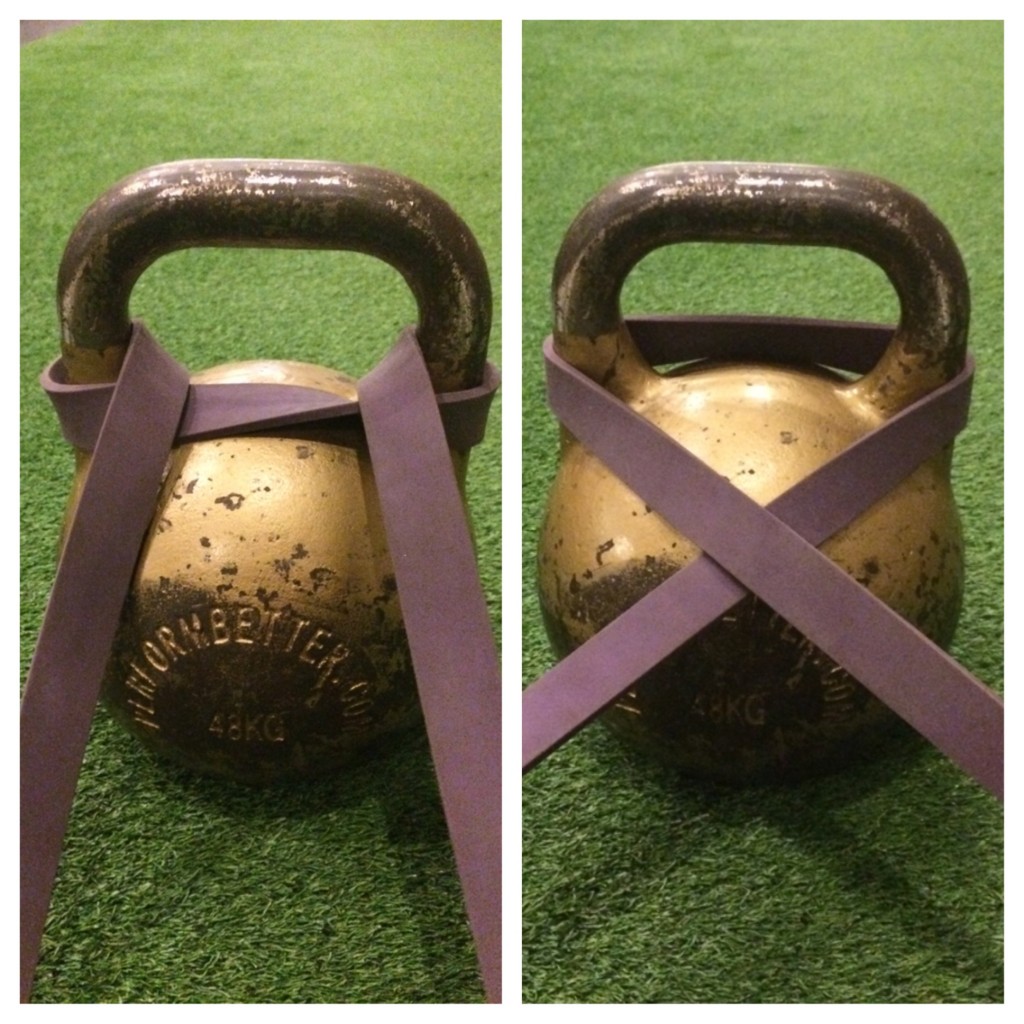
How to set it up (right image first, then left)
Prescription : 5-8 sets of 8 explosive repetitions
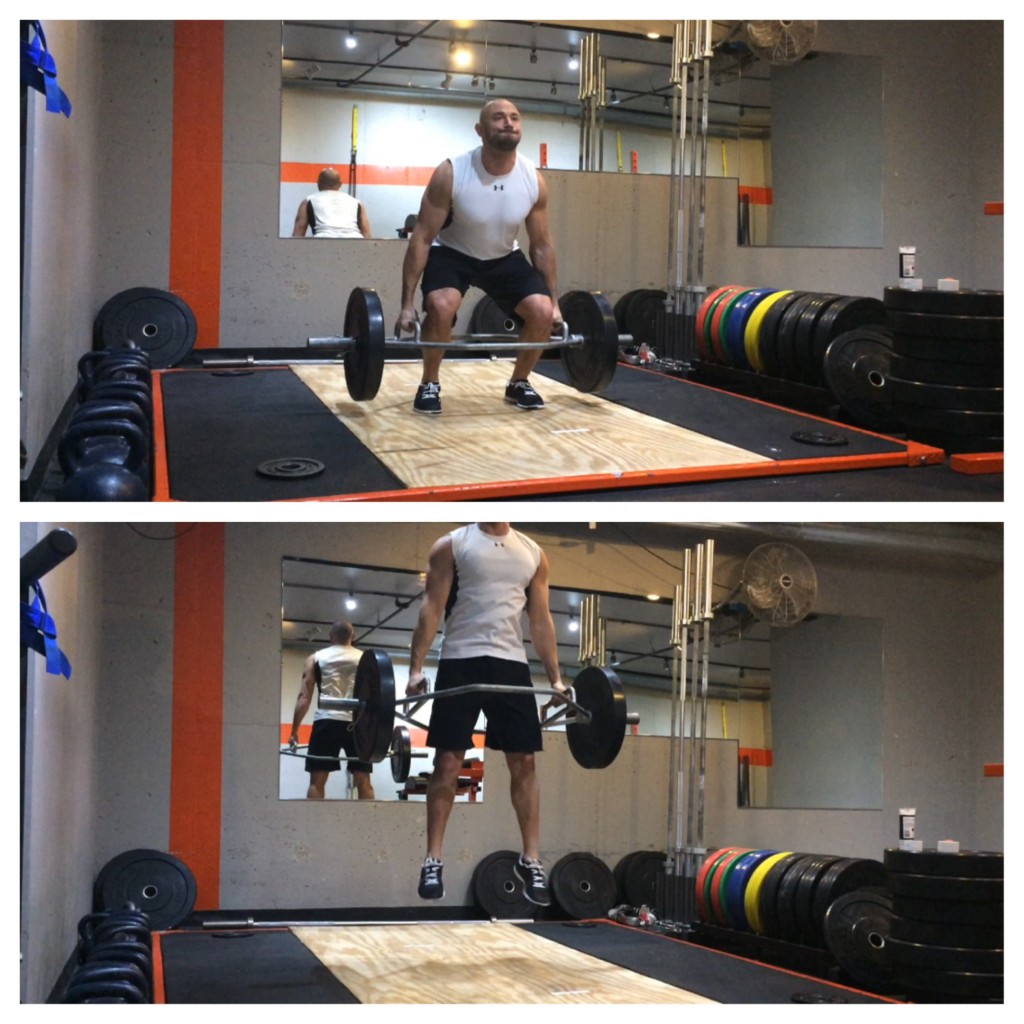
Most feel more comfortable with the weight in the hands as opposed to the weight placed on the back, especially if something ‘doesn’t feel right’. It is easier to let go and release the weight rather than trying to dump the bar off your back.
Jump as high as possible on each rep, absorb the impact during landing, and minimize the time you spend in contact with the ground in between each rep.
Prescription: 3-5 sets of 3 explosive repetitions with 50-60% of 1RM hex bar deadlift
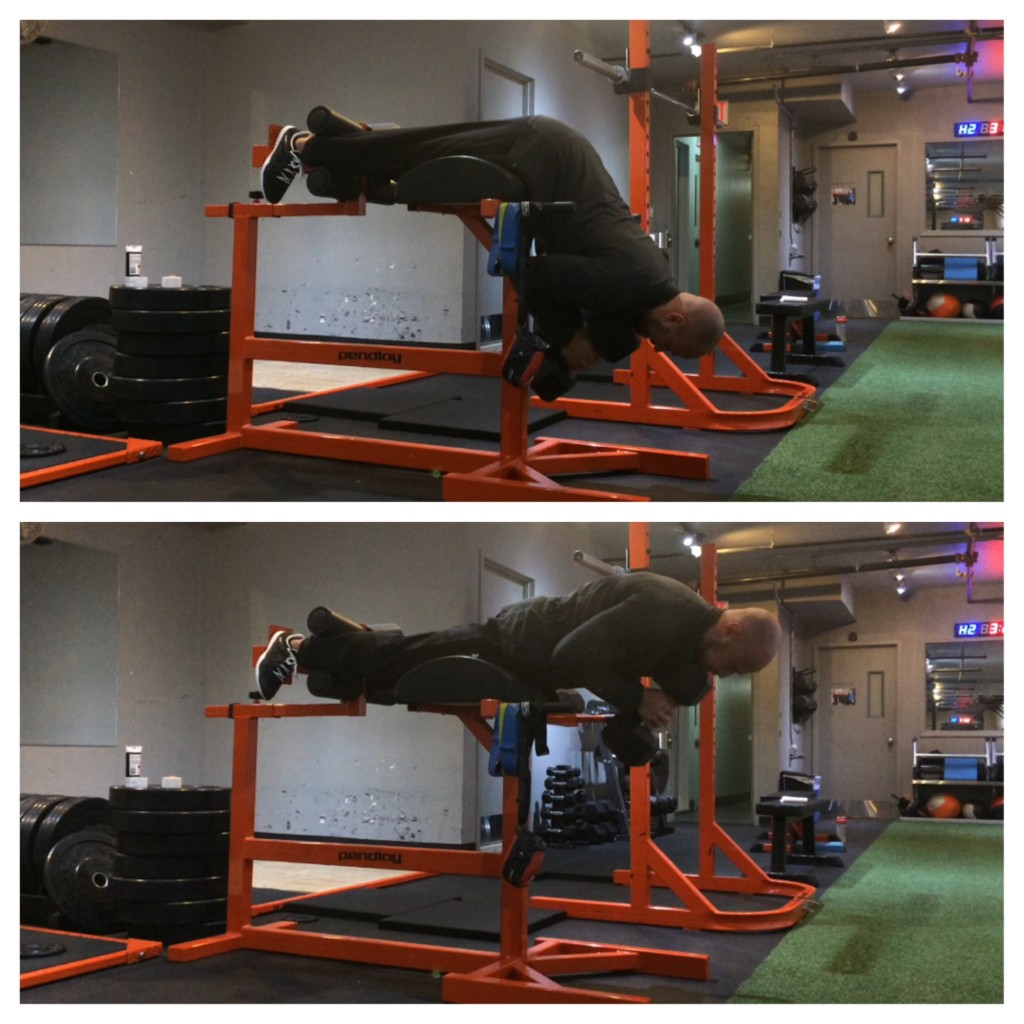
The main focus should be maintaining posterior pelvic tilt, keeping the upper back rounded, driving the hips into the pad as hard as possible and then reversing the movement as quickly as possible.
Prescription: 3-5 sets of eight explosive repetitions with 50% load used for a hard set of 20 reps
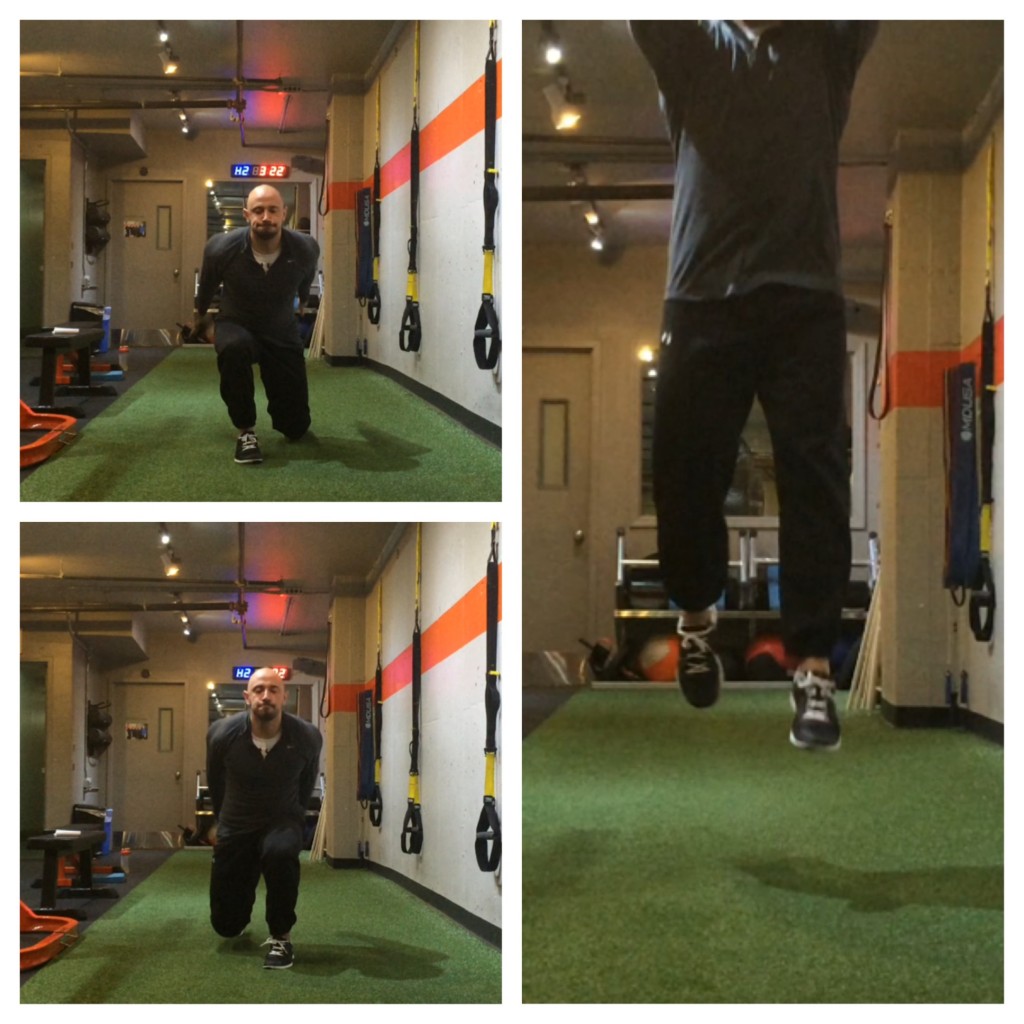
An external load can be used by holding dumbbells or wearing a weight vest if need be. I prefer the weight vest (typically 10-20lbs) compared to dumbbells since the weight vest still allows the use of an arm swing, which is a important component in improving jumping ability.
Prescription: 5-8 sets of 4 repetitions per foot
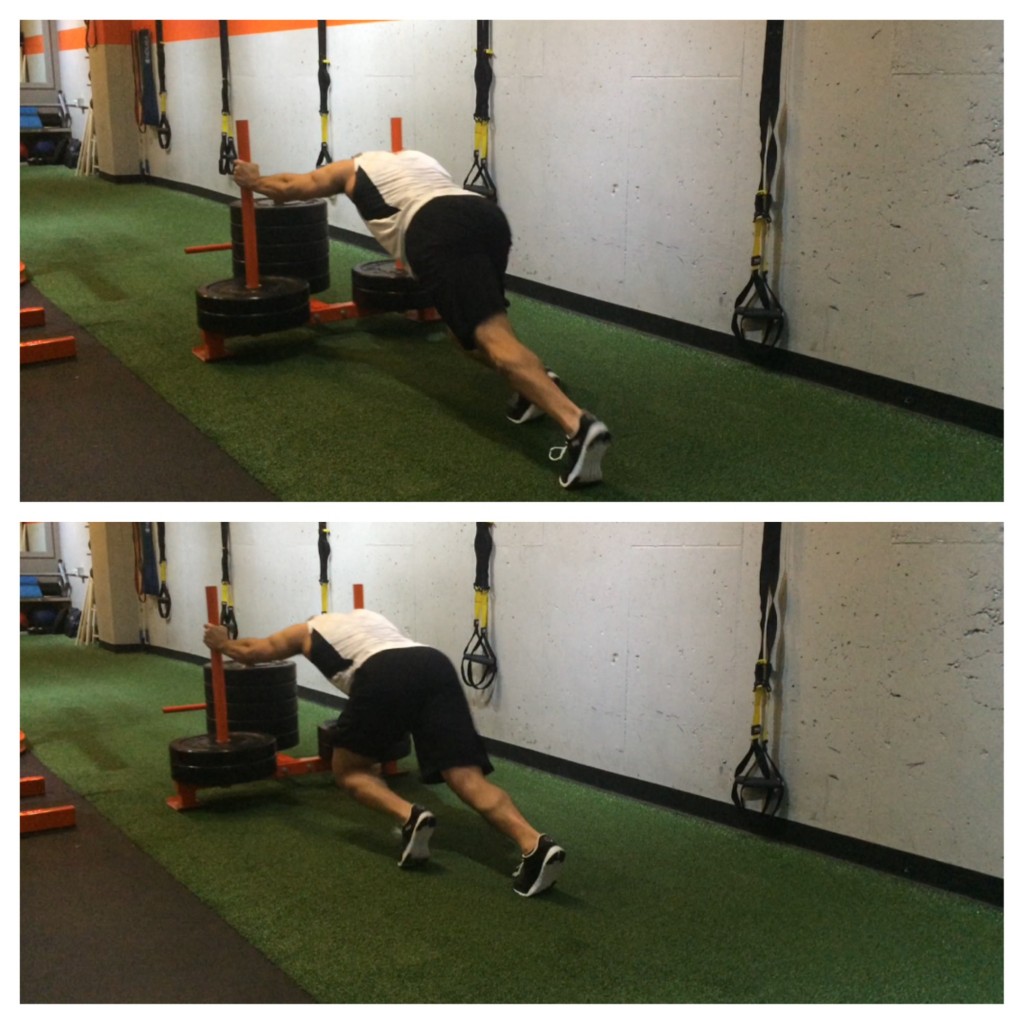
Two common ways to perform sled sprints include:
Prescription: 5-8 sets of 10-20 yards sprints
Remember ‘QUALITY over QUANITITY ‘
By Joey Percia
‘Olympic lifting is terrible, heavy barbell training is useless, sprinting sucks’.
Sound familiar?
Training to maximize power output becomes a very interesting topic when discussed amongst strength coaches. Some coaches swear by Olympic lifts and its variations, while others use a variety of approaches when seeking out maximal power development.
What is power?
Power is work divided by time ( P = work / time) and is a product of strength and speed. Research has shown that the optimum load for maximizing power production in a particular exercise depends on the movement being performed. Some studies show very little significant difference between loads (the Olympic lifts), while others have a much more obvious load that maximizes power (jump squats).
Someone that tells you that power is only developed at a certain percentage of your 1RM (for example, at 30% of 1RM), no matter what the exercise being performed, is misinformed. Some lifts are maximized at 0% of 1RM (jump squat), others at 30-70% of 1RM (bench throw, bench press, leg press, half squat, split jump squat), and others at 80% of 1RM and above (Olympic lift variations).
Considerations For Exercise Selection
Here are some important variables to account for when choosing exercises to develop devastating power.1. Training Age
Choose exercises that coincide with an athlete’s training age — referring to the number of years they have been strength training. Those with a younger training age tend to show greater difficulty properly executing complicated exercises, in which case these should be avoided. Athletes spend a limited amount of time with a strength coach, which is why it is of great importance to perform exercises that will elicit the greatest gains (‘the most bang for your buck’).Time is precious. It is a waste to prescribe frustrating and difficult tasks to athletes whose time spent with a strength coach is limited and valuable. Choose movements that are significantly easier to learn and perform yet are still highly beneficial.
2. Coach to Athlete Ratio
Monitor the athlete. Make sure form is correct and exercises are being performed safely and effectively. This is critical because the job of a coach depends on the athlete’s safety. Advanced movements and technical lifts which require different equipment and more coaching may not be optimal for settings other than one-on-one and small-group training. There is nothing wrong with performing these lifts if the proper amount of coaching is dedicated to each athlete.3. Equipment Availability
Equipment is not just a common problem in commercial gyms. With larger groups of athletes, equipment can become an issue as well. When choosing an exercise make sure the athlete is able to perform it in the manner in which it was designed to increase maximal power output, specifically in relation to recovery time between sets and the optimal loading being used. It would be foolish to try to manage a group of 15 athletes doing barbell jumps squats with only 2 barbells .4. Movement Specificity
To ensure you choose the most beneficial exercises to improve power in a particular sporting movement or event, look at the movement and ask these simple questions:- What is the direction of the movement?
- What joints are involved?
- What are the muscles that cross those joints?
- What is the speed of the movement?
- What is the duration of the movement?
- How intense are the muscular contraction?
Movement Execution
“Bad Intentions”
You can’t just grab a kettlebell, do half-hearted swings and say you are training power. Well you can, but that doesn’t mean you are going to achieve the desired training adaptations you are seeking.One of the key aspects for developing power that demands respect is intent. The intent to move the bar, object or body as fast and hard as humanly possible while maintaining proper technique. When the load is higher, speed will necessarily decrease, but the intent to move as fast as possible must remain. This is a very important component to developing power.
In this case, violence is acceptable — often encouraged. Perform the movement with ‘controlled chaos’ as I like to call it.
Quality over Quantity
Speed must be maintained throughout the set. If it starts to decrease the set or exercise should be terminated. This is critical. Speed may drop off because the intent has decreased or fatigue has set in because rest in between sets was too short or due to the accumulation of volume.Make sure you allow adequate rest in between sets to fully recover and keep those bad intentions flowing.
The Exercises
Band Resisted Swing or Heavy Kettlebell Swing
Heavy kettlebell swings have a noticeably different feeling than using a lighter kettlebell. Pilot research shows that heavy swings compared to lighter swings elicit higher glute and hamstring activity. To get the most out of the heavy kettlebell swing for a power exercise, make sure you focus on the ‘hip snap’ by violently contracting the glutes. This makes a huge difference opposed to coasting through the end of the movement, especially when it comes to developing serious power.When I worked with Bret at the Glute Lab we liked to perform heavy kettlebell swings with the 203lb kettlebell. For males with a 450lb+ deadlift this is a good goal weight.
Unfortunately the largest kettlebell I have access to is the 106lb, that is shown. I attach bands to the kettlebell to add resistance. This doesn’t have the exact same feeling of swinging the 203lb’er but it is very similar and teaches a powerful hip extension. I actually prefer the band resisted swing over the heavy kettlebell swing because it is easier for most to control the movement but still must be performed violently because of the added band resistance.
How to set it up (right image first, then left)
Prescription : 5-8 sets of 8 explosive repetitions
Hex Bar Jump Squat
The hex bar jump squat looks similar to the traditional barbell jump squat except weight is held in the hands. This makes it a hip dominant movement compared to the barbell jump squat being more quad dominant. Research has shown that you can achieve greater power outputs with the hex bar jump squat compared to the back loaded barbell jump squat.
Most feel more comfortable with the weight in the hands as opposed to the weight placed on the back, especially if something ‘doesn’t feel right’. It is easier to let go and release the weight rather than trying to dump the bar off your back.
Jump as high as possible on each rep, absorb the impact during landing, and minimize the time you spend in contact with the ground in between each rep.
Prescription: 3-5 sets of 3 explosive repetitions with 50-60% of 1RM hex bar deadlift
Explosive Back Extensions
The explosive back extension should be performed with a slightly rounded upper back and posterior pelvic tilt compared to the traditional back extension with a neutral spine. Perform explosive back extensions with a lighter load or against resistance bands — preferably monster mini band for males and mini band for females.
The main focus should be maintaining posterior pelvic tilt, keeping the upper back rounded, driving the hips into the pad as hard as possible and then reversing the movement as quickly as possible.
Prescription: 3-5 sets of eight explosive repetitions with 50% load used for a hard set of 20 reps
Jumping Lunges
Jumping lunges are a great movement to develop power when space and equipment is limited to only bodyweight. The jumping lunge is great because technique can be dialed in to ensure the athlete’s safety. The movement is very easy to learn compared to other single leg plyometrics activities and in most cases very similar to positions found in common field sports.
An external load can be used by holding dumbbells or wearing a weight vest if need be. I prefer the weight vest (typically 10-20lbs) compared to dumbbells since the weight vest still allows the use of an arm swing, which is a important component in improving jumping ability.
Prescription: 5-8 sets of 4 repetitions per foot
Sled Sprints
Sled sprints are an amazing movement to include for the development of tremendous lower body power. The sled allows the athlete to strengthen the sprinting muscles while decreasing the overall loading as well as wear and tear on the joints.
Two common ways to perform sled sprints include:
- Lighter weights which moves quickly
- Very heavy weights which moves slowly
Prescription: 5-8 sets of 10-20 yards sprints
Putting It All Together
When the goal of training is to increase maximal power production it is important to perform these movements in a well-recovered state. This can be accomplished by placing power exercises at the beginning of training or training these movements at a separate time after allowing adequate time for refueling and recovery — For example:- AM Session – Heavy sled sprints of 5 x 10 yards
- PM Session – Normal strength training regimen later that day with decrease in normal volume
Conclusion
Whether you are training for looks, fun or an athletic event it never hurts to be more powerful. Using the movements listed in this article will allow you to train harder while feeling better. Give your body a break and give these joint-friendly power exercises a shot.Remember ‘QUALITY over QUANITITY ‘


