

Drinking 3 cups of cistus tea daily hinders the molecular demolition work in your body (and improves your cholesterol)
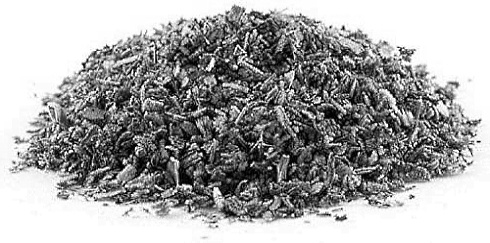
The plant Cistus incanus grows in the Mediterranean. You can make tea from the dried leaves of this plant. Drinking three cups of cistus tea daily will improve your cholesterol balance and reduce the damage that aggressive molecules cause in your body.
Study
[TABLE="width: 358, align: right"]
[TR]
[TD="align: right"][/TD]
[/TR]
[/TABLE]
Chemists from the Medical University of Gdansk in Poland got 24 healthy subjects to drink 3 cups of cistus tea every day for 12 weeks. The tea was made by the test subjects themselves. Each 250 milliliter cup of tea was made by steeping 2 grams of dried leaves of Cistus incanus. The subjects successively made three cups of tea from every 2 grams of cistus leaves.Cistus tea contains flavonoids such as quercetin and myrecitin,
Results
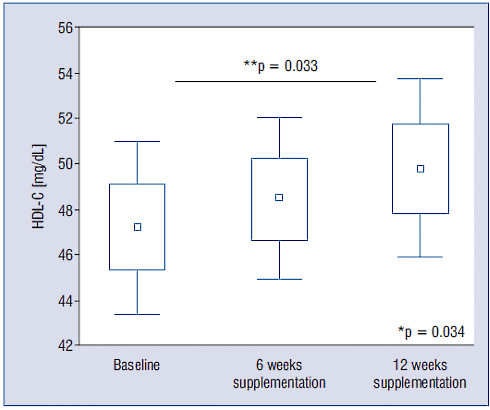
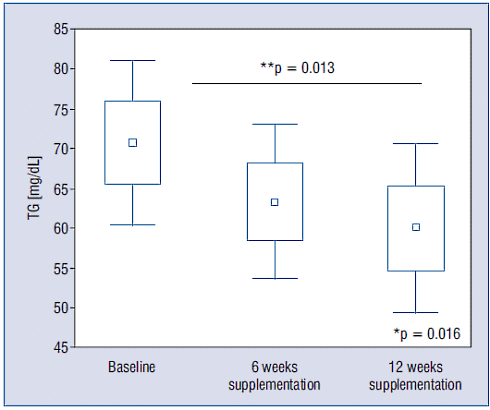
The addition of three cups of cistus tea to the diet of the study participants led to a 4 percent increase in 'good cholesterol' HDL in the blood. The concentration of triglycerides - which is about the same as the 'very bad cholesterol' VLDL - decreased by 14 percent.
 [FONT="]
[/FONT]
 Cistus tea had no effect on LDL cholesterol and total cholesterol.
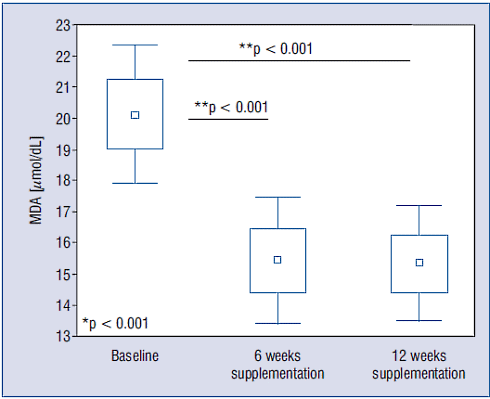
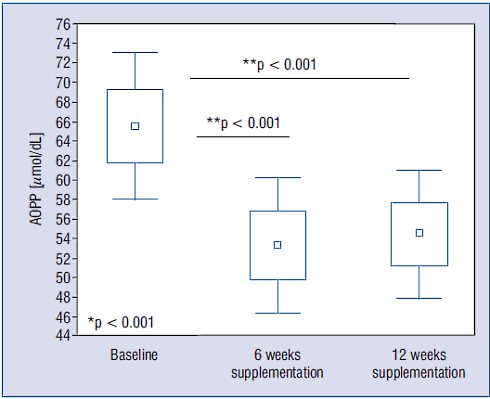
The researchers also saw that drinking cistus tea reduced the concentration of malondialdehyde [MDA] and advanced oxidation protein products [AOPP]. Both are markers for the activity of aggressive molecules chemists call free radicals.
MDA is formed when oxygen radicals attack lipids, AOPPs when free radicals attack proteins. Many MDAs are caused by damage to cell membranes, many AOPPs by damage to albumin.
Cistus tea had no effect on LDL cholesterol and total cholesterol.
The researchers also saw that drinking cistus tea reduced the concentration of malondialdehyde [MDA] and advanced oxidation protein products [AOPP]. Both are markers for the activity of aggressive molecules chemists call free radicals.
MDA is formed when oxygen radicals attack lipids, AOPPs when free radicals attack proteins. Many MDAs are caused by damage to cell membranes, many AOPPs by damage to albumin.
 [FONT="]
[/FONT]
 "This study supports the idea that Cistus incanus tea can be a valuable source of polyphenols in the human diet", write the researchers.
"Supplementations with the commercially available Turkish Cistus incanus tea had a positive impact on oxidative stress markers and lipids profile, allowing us to suggest that there is a wide range of pro-health properties of Cistus incanus."
Source:
"This study supports the idea that Cistus incanus tea can be a valuable source of polyphenols in the human diet", write the researchers.
"Supplementations with the commercially available Turkish Cistus incanus tea had a positive impact on oxidative stress markers and lipids profile, allowing us to suggest that there is a wide range of pro-health properties of Cistus incanus."
Source:
Cardiol J. 2021;28(4):534-42.
The plant Cistus incanus grows in the Mediterranean. You can make tea from the dried leaves of this plant. Drinking three cups of cistus tea daily will improve your cholesterol balance and reduce the damage that aggressive molecules cause in your body.
Study
[TABLE="width: 358, align: right"]
[TR]
[TD="align: right"][/TD]
[/TR]
[/TABLE]
Chemists from the Medical University of Gdansk in Poland got 24 healthy subjects to drink 3 cups of cistus tea every day for 12 weeks. The tea was made by the test subjects themselves. Each 250 milliliter cup of tea was made by steeping 2 grams of dried leaves of Cistus incanus. The subjects successively made three cups of tea from every 2 grams of cistus leaves.Cistus tea contains flavonoids such as quercetin and myrecitin,
The addition of three cups of cistus tea to the diet of the study participants led to a 4 percent increase in 'good cholesterol' HDL in the blood. The concentration of triglycerides - which is about the same as the 'very bad cholesterol' VLDL - decreased by 14 percent.
[/FONT]
[/FONT]
Cardiol J. 2021;28(4):534-42.


